CASE STUDY · OFFERWELL
Deciding what should — and shouldn't — become AI.
Offerwell is building AgentOS, a transaction platform for real estate agents. I wrote the AI product strategy: which problems genuinely warranted a model, which interaction model each one deserved, and what to give away to win the market.
AI PRODUCT STRATEGY·INTERACTION MODEL·CONCEPT DESIGN·2024
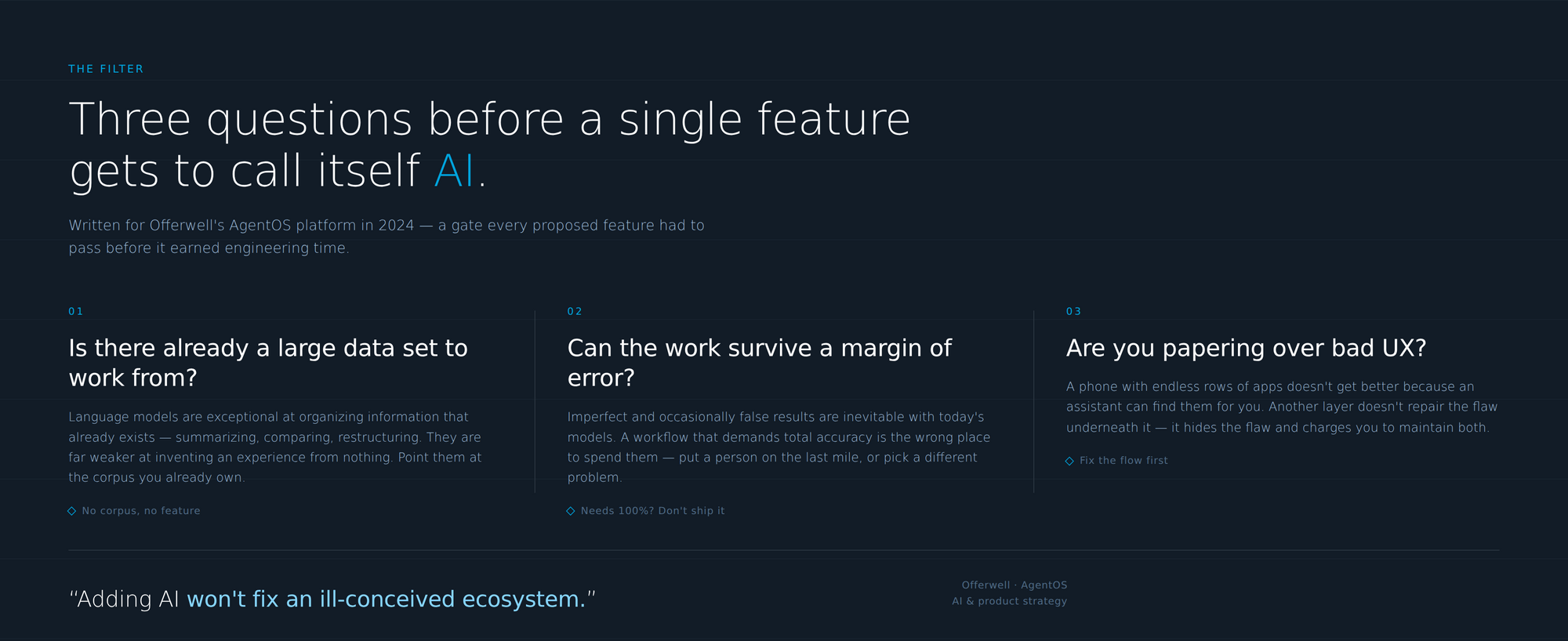
Every proposed feature had to clear all three before it earned engineering time.
One button, and a compliance problem disappears.
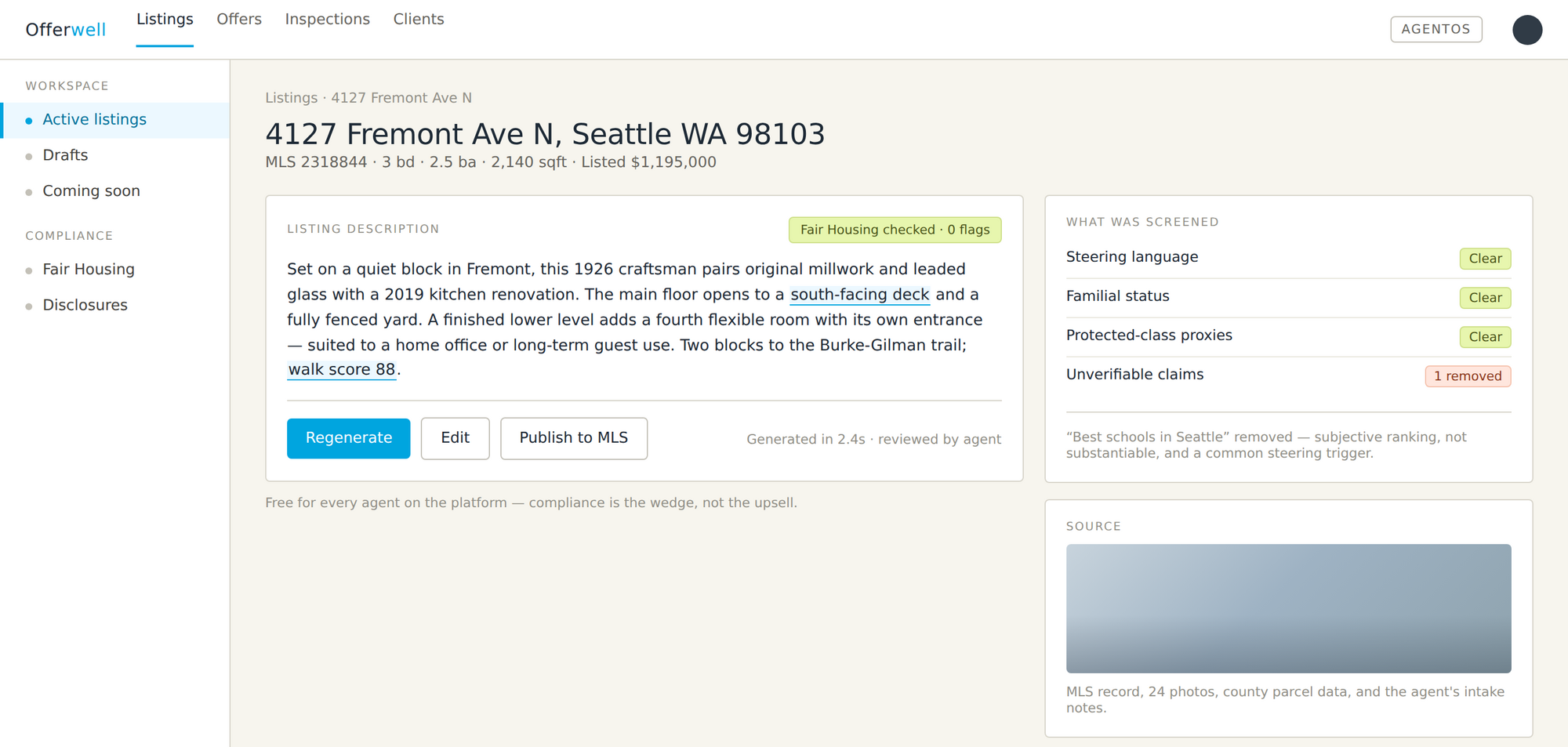
Fair Housing violations in listing copy are a real liability and every agent writes them by accident. Generated descriptions get screened for steering language, familial status, protected-class proxies, and unverifiable claims. I argued this should ship free to every agent on the platform — compliance is the wedge, not the upsell.
01 TRIGGER
One button, and a compliance problem disappears.
Fair Housing violations in listing copy are a real liability and every agent writes them by accident. Generated descriptions get screened for steering language, familial status, protected-class proxies, and unverifiable claims. I argued this should ship free to every agent on the platform — compliance is the wedge, not the upsell.
02 PROMPT
An offer written from what actually won.
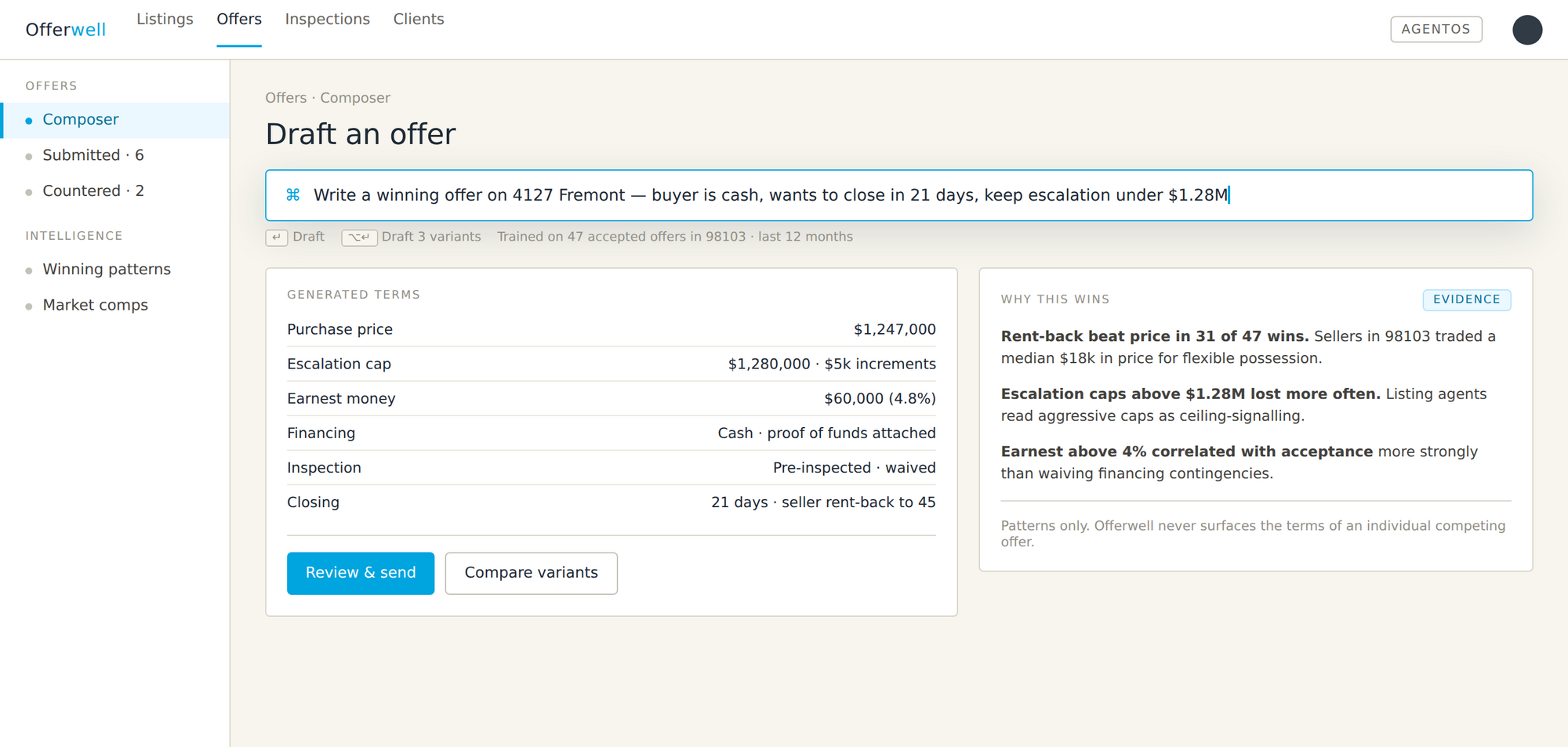
The agent describes the constraints in plain language; the system drafts terms informed by patterns across accepted offers in that market. The reasoning panel matters more than the output — rent-back beat price in most wins, which is not what most agents assume. Patterns only: the system never surfaces the terms of an individual competing offer.
03 CHAT
The report contradicts its own summary.
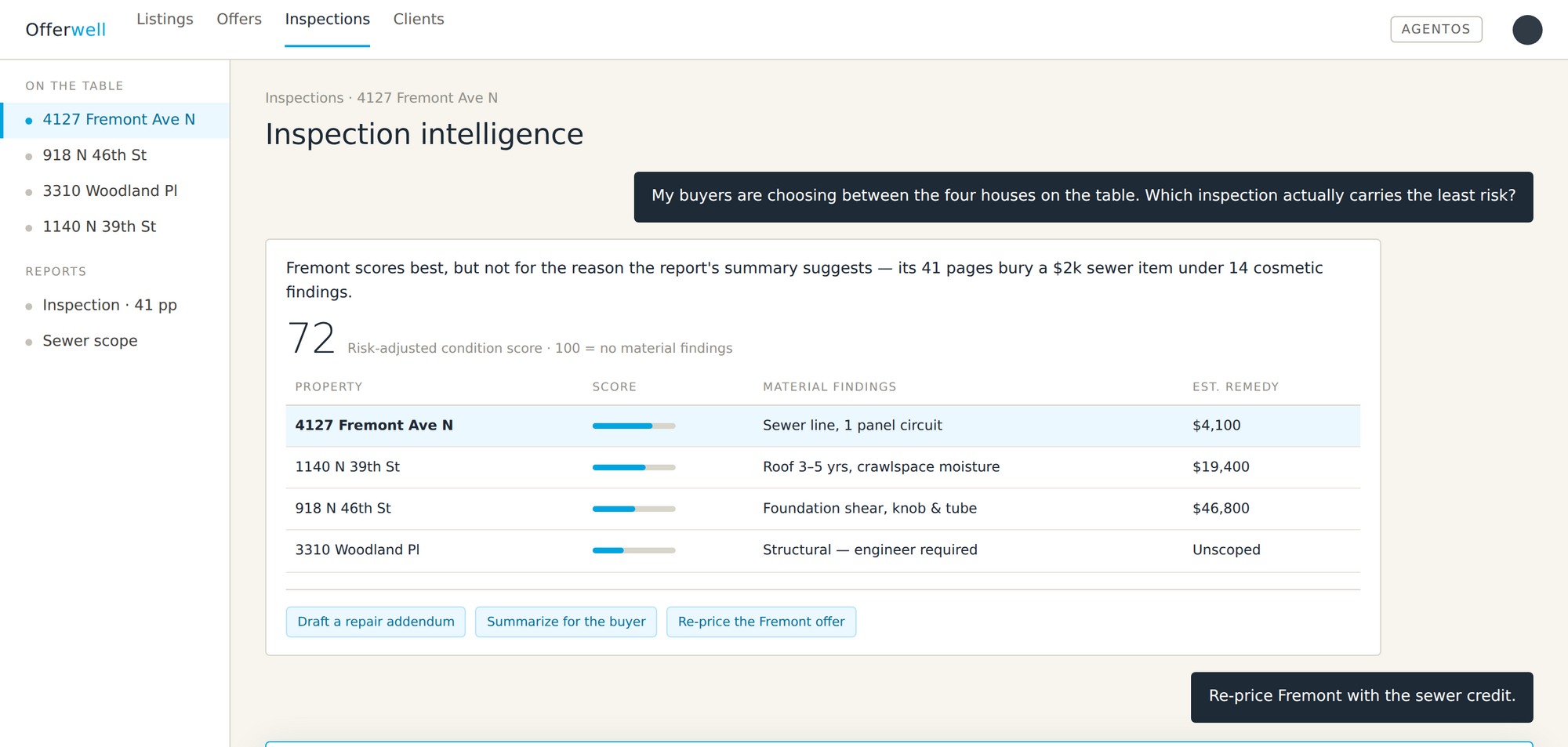
A 41-page inspection buries a $2,000 sewer line under fourteen cosmetic findings. Conversation is the right interaction model here because the question is comparative and open-ended — scoring one report is useful, comparing every property on the table is the actual job.
Strategy, not shipped product. The framework outlived the roadmap.
Concept design — created to pressure-test the strategy, not shipped to production.